
What's Actually Living in Your Gut (And What to Eat When It's Not Cooperating)
September 21, 2026 · gut health · digestion · fiber · fermented foods
The microbiome isn't one thing, fiber isn't optional, and there's a real reason your gut test doesn't tell the whole story. Plus what to eat when your stomach's off.
The word "microbiome" is doing a lot of hiding
People talk about "the microbiome" like it's a single organ, a thing you either have in good shape or bad shape. It's not. It's an entire ecosystem — trillions of bacteria, fungi, and other microbes living in different neighborhoods of your digestive tract, each neighborhood with its own conditions and its own residents.
The environment in your small intestine is nothing like the environment in your colon. Different oxygen levels, different pH, different food supply. Bacteria that thrive in one section would struggle in another. So when someone says "the microbiome," they're really talking about dozens of overlapping communities that happen to share an address.
The detail most people never hear
Here's the thing almost nobody explains when they're selling you on gut testing: a standard stool-based microbiome test doesn't actually see most of your digestive tract. It sees what's left in the sample after everything has already passed through your entire system and landed in the large intestine on its way out.
That means it's heavily weighted toward colon bacteria — because that's what survives the trip and shows up at the end. The small intestine, where a huge amount of actual digestion and nutrient absorption happens, is largely invisible to that kind of test. It's not that the tests are useless, it's that they're measuring the exit, not the whole building. Worth knowing before you put too much weight on a single report.
Why fiber isn't just "good for you" in the vague sense
Fiber gets recommended so often it's become background noise, which is a shame, because the actual mechanism is genuinely interesting. Certain fibers — the fermentable kind, found in things like oats, beans, onions, bananas, and most vegetables — aren't digested by you at all. They're digested by your gut bacteria.
When bacteria ferment that fiber, they produce compounds called short-chain fatty acids, which are one of the main fuel sources for the cells lining your colon. No fiber reaching the colon means those cells are running on a smaller fuel supply. This is the part that gets left out of "eat more fiber" advice — it's not just about keeping things moving, it's about feeding the tissue that keeps your gut lining doing its job.
Why fermented foods matter even though they mostly don't stick around
Fermented foods — yogurt, kefir, sauerkraut, kimchi, miso — get sold as a way to "repopulate" your gut with good bacteria. That's a slight oversimplification. Most of the live organisms in fermented food pass through as visitors, not permanent residents. They don't set up camp for years.
But transient doesn't mean pointless. While they're passing through, they interact with your existing bacteria, compete with less helpful organisms for space and resources, and in some cases produce their own beneficial byproducts along the way. Think of it less like moving in new tenants and more like having useful houseguests on a regular basis — the value comes from the frequency, not from any single visit.
What to eat on a day your stomach is being difficult
Everyone's trigger list is different, but there's a reasonably reliable pattern for days when your gut wants things simple:
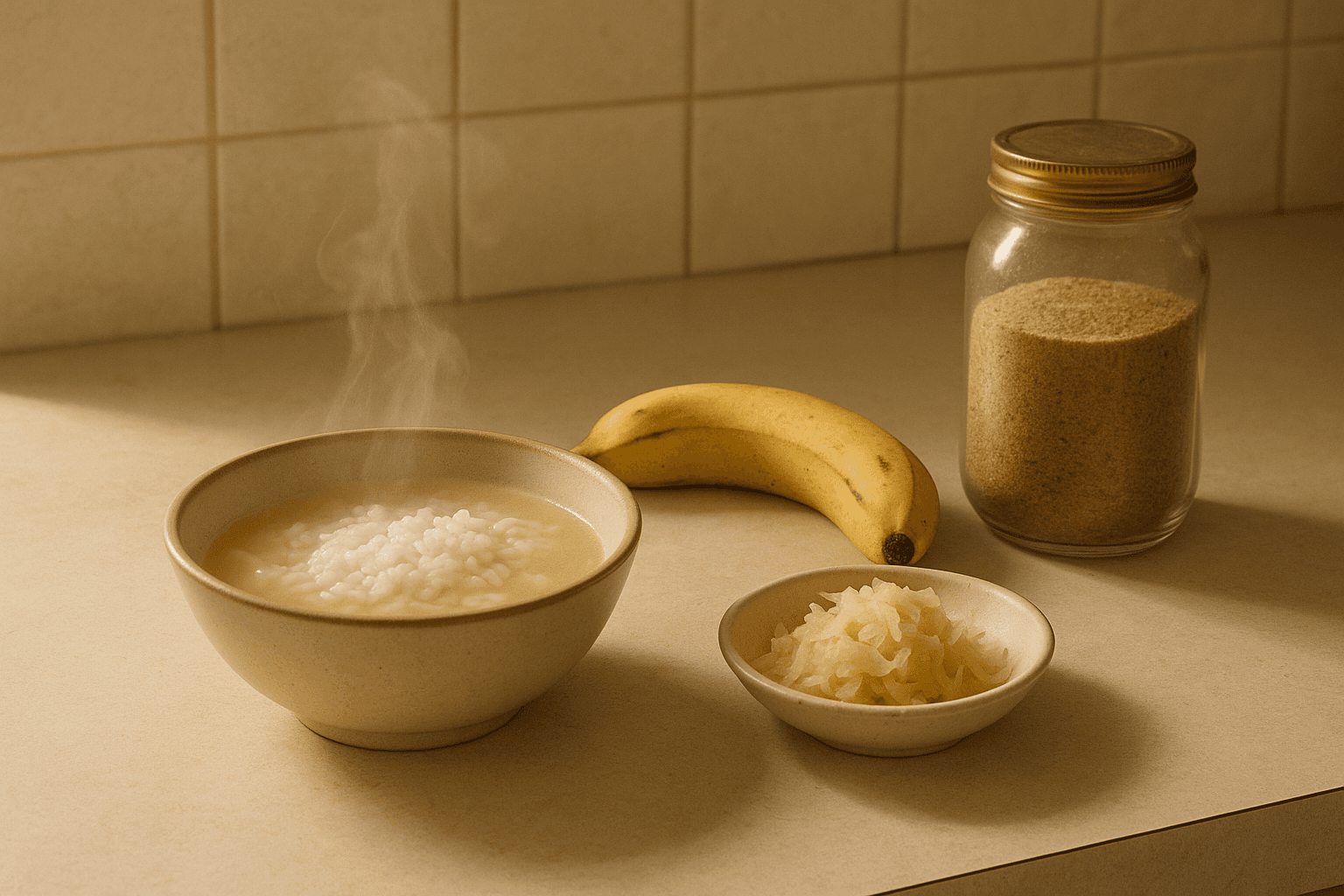
- Low-fiber, cooked, soft foods — white rice, plain toast, boiled or baked potato without the skin, well-cooked eggs. Nothing your gut has to work hard to break down.
- Broth and clear soups — easy on digestion and useful for fluids and electrolytes, especially if you've had any stomach upset that came with fluid loss.
- Bananas and applesauce — low in the fermentable fiber that can cause bloating when things are already unsettled, and gentle on an irritated stomach.
- Ginger, in tea or just steeped in hot water — one of the few things with a long, consistent track record for taking the edge off nausea.
- Skip the usual suspects — this is the day to go light on raw vegetables, beans, carbonation, alcohol, anything very fatty or very spicy, and coffee if it normally moves things along faster than you'd like.
The goal on a bad-gut day isn't nutrition optimization. It's giving your system the smallest possible workload until it settles, then working your way back to normal food over a day or two, not all at once.
Where support actually fits in
None of this replaces a normal, varied diet with real fiber and real fermented foods in it most days — that's the actual long-term work. But on days when digestion is already off, or you're trying to keep a baseline of gut support going without overcomplicating things, Digestive + Gut Health Strips are built to be simple and easy to take when food itself feels complicated. They're not a fix for a bad stomach day — nothing is, really, except time and the boring basics above — but they're a low-effort way to support the system that's doing the actual work.
These statements have not been evaluated by the Food and Drug Administration. CounterPep products are nutritional supplements and are not intended to diagnose, treat, cure, or prevent any disease. Always talk to your prescribing provider before changing how or when you take any prescribed medication.